How is coffee decaffeinated?
With water or carbon dioxide, before roasting. Good raw material makes good decaf.
With water or carbon dioxide, before roasting. Good raw material makes good decaf.
Caffeine is extracted from the green coffee, before roasting. There are several processes:
Swiss Water: the green beans are soaked in water and the caffeine is then captured on an activated carbon filter. Solvent-free, and it preserves the flavour well.
Carbon dioxide: high-pressure supercritical CO₂ dissolves the caffeine selectively. Also solvent-free, and efficient at scale.
Sugarcane-based (ethyl acetate): common in Colombia, using ethyl acetate obtained from fermenting sugarcane. Naturally derived, and many people think it preserves the sweetness best.
Why so much decaf is bad: because it is made from poor raw material. Decaffeination is hard on the bean by itself, and if you start with mediocre coffee the result will be flat.
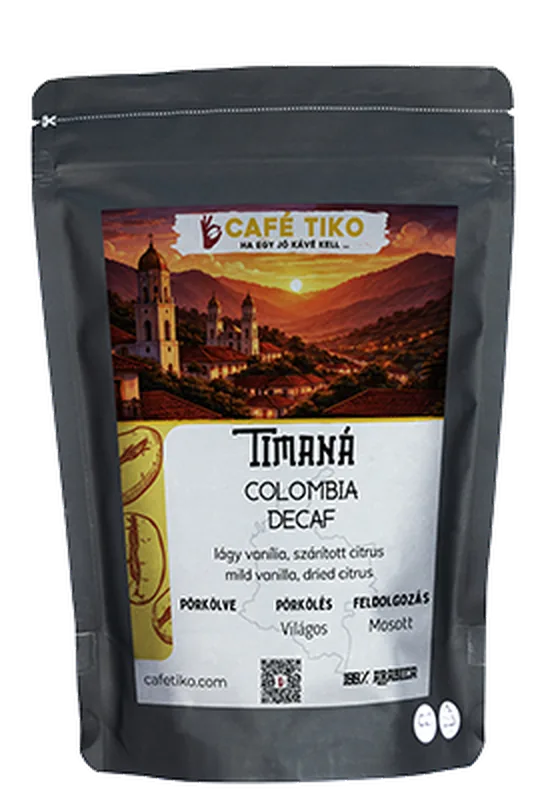
With us: all three of our decafs come from a lot grown by the ASOMUJER women’s producer association in Colombia — Timaná (light), Pereira (medium), Manizales (dark). The same logic as every other lot.
Is there any caffeine left? Yes, a little. The standard requires at least 97% of the caffeine to be removed, so a cup holds roughly as much as a cup of decaffeinated tea.
Taste it
This site uses cookies. And something far better: coffee — and a few Costa Rican words.
The words marked in green are Spanish. Tap any of them and it tells you what it means.